Blockchain-Verified Digital Certificates
ICRI issues tamper-proof, instantly verifiable digital credentials using the Blockcerts open standard, developed by MIT Media Lab and anchored on the blockchain for permanent authenticity.
What is Blockcerts?
Blockcerts is an open standard for creating, issuing, viewing, and verifying blockchain-based certificates. Developed by MIT Media Lab's Learning Machine team, it provides a decentralized, tamper-proof credentialing system.
Tamper-Proof
Once issued, certificates are anchored to the blockchain. Any attempt to alter the certificate data invalidates the cryptographic signature, making forgery impossible.
Recipient-Owned
Recipients own their certificates as digital files. No central authority can revoke access, and credentials remain valid even if ICRI's servers go offline.
Instantly Verifiable
Anyone can verify certificate authenticity in seconds using the Blockcerts Universal Verifier or by scanning a QR code—no login or account required.
Decentralized
Certificates are anchored on public blockchains (Bitcoin, Ethereum) ensuring permanence and independence from any single organization or database.
How It Works
ICRI certificates include embedded QR codes for instant blockchain verification. See examples below:
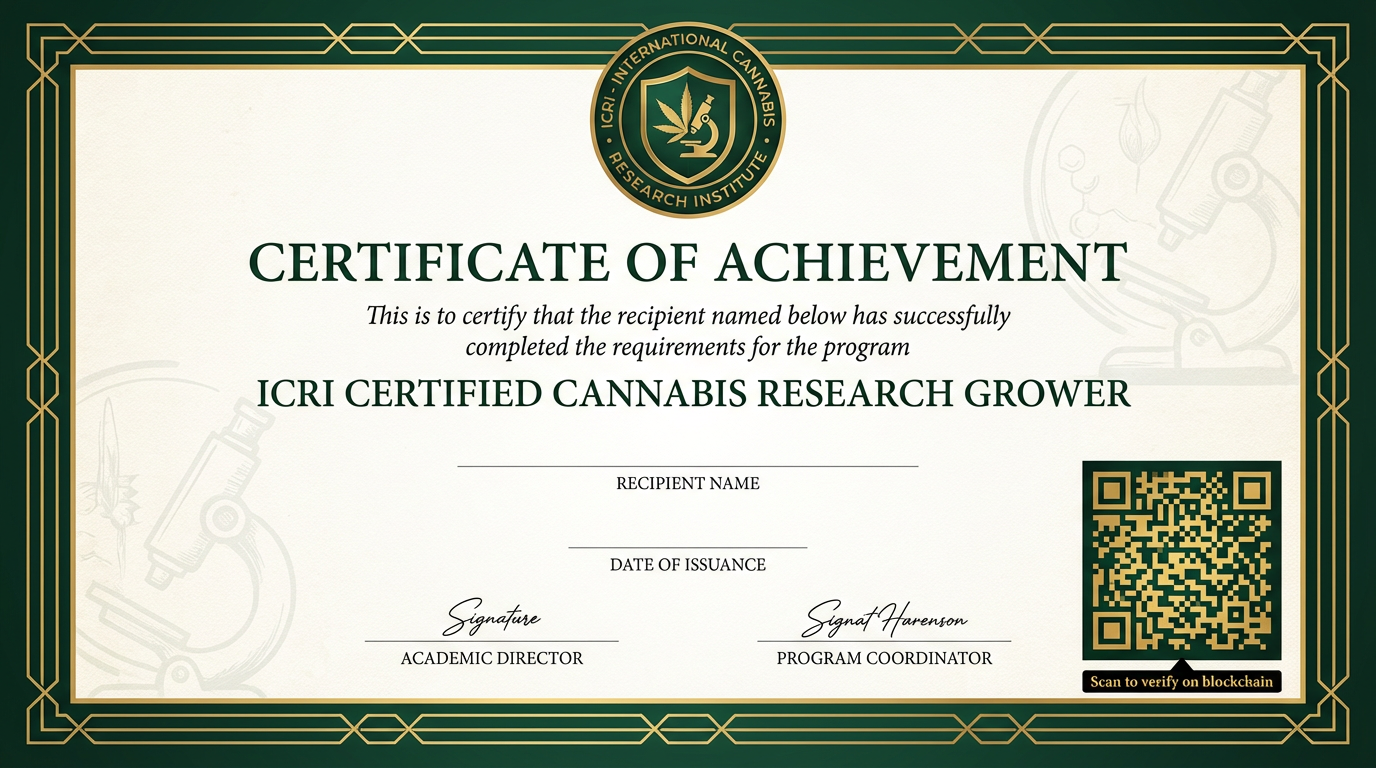
Certificate with QR Code
Every ICRI certificate includes a unique QR code that links to the blockchain record. Simply scan with any smartphone to instantly verify authenticity.
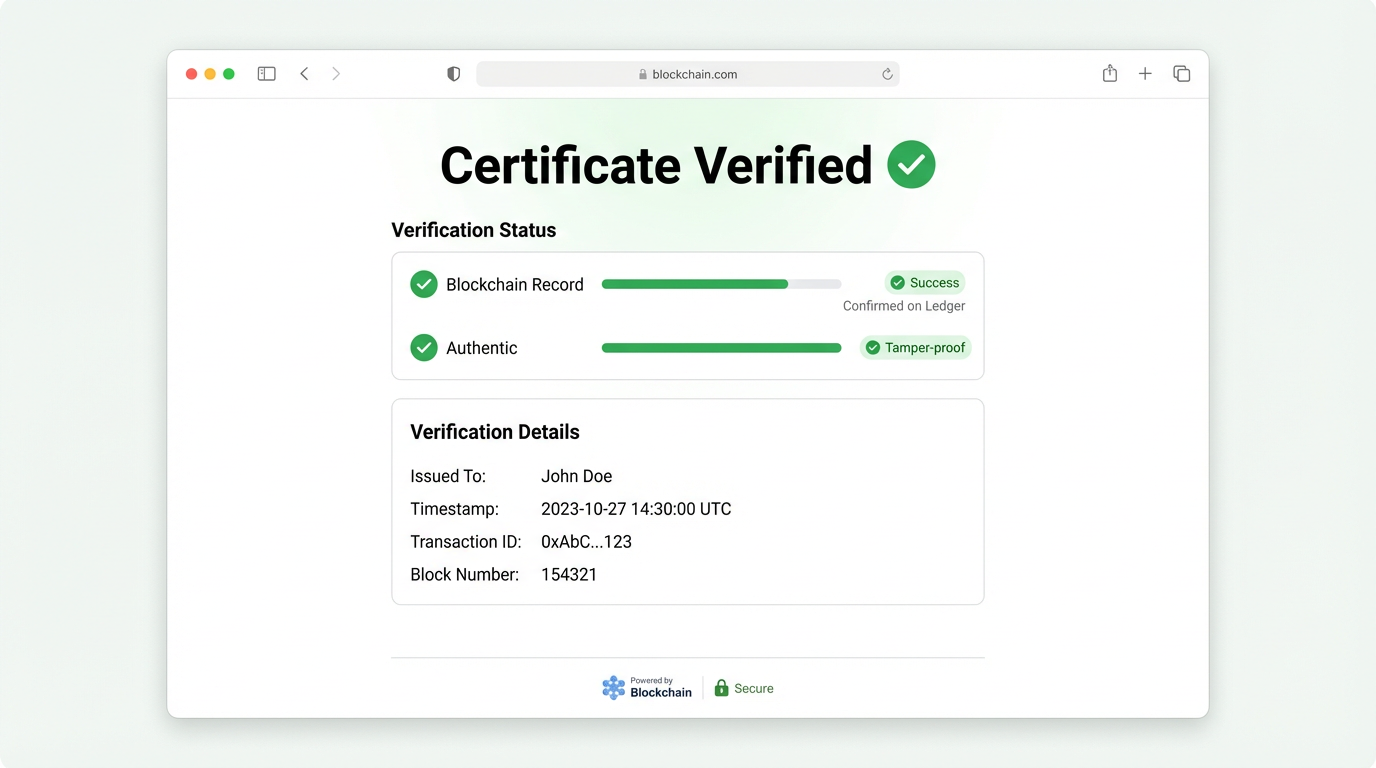
Verification Portal
The verification portal shows the blockchain record, timestamp, recipient details, and cryptographic proof of authenticity. All data is immutable and permanently recorded.
Why Blockchain Certification Matters
Traditional paper and PDF certificates are easily forged. Blockchain certification provides unprecedented security and trust.
Prevent Fraud
Employers, regulators, and partners can instantly verify credentials without contacting ICRI, eliminating resume fraud.
Instant Verification
No waiting for phone calls or emails. Verification happens in seconds through blockchain lookup.
Permanent Record
Blockchain records last forever, even if ICRI closes. Your credentials are permanently preserved.
Global Standard
Blockcerts is recognized worldwide and compatible with LinkedIn, digital wallets, and HR systems.
Privacy Control
You control who sees your certificate. Share digitally or keep private—it's your credential.
Regulatory Ready
Blockchain verification meets FDA, IRB, and Schedule III compliance requirements for audit trails.
Built on MIT Technology
Blockcerts was developed by the MIT Media Lab in collaboration with Learning Machine (now part of Hyland). The standard is open-source, vendor-neutral, and designed for long-term sustainability.
Technical Standards
- W3C Verifiable Credentials: Compliant with global web standards
- JSON-LD: Machine-readable credential format
- Bitcoin/Ethereum Anchoring: Public blockchain permanence
- Digital Signatures: Cryptographic proof of issuer authenticity
Open Source
The Blockcerts standard and verification tools are 100% open source, ensuring transparency, security auditing, and community-driven improvement.
Learn More About BlockcertsEarn Your Blockchain-Verified Certificate
All ICRI certification programs award blockchain-verified digital credentials upon successful completion.
Certified Cannabis Research Grower (CCRG)
Earn your professional CCRG certification with blockchain verification
All ICRI certificates are blockchain-anchored for permanent authenticity.
View All Research ProgramsFrequently Asked Questions
Do I need cryptocurrency to verify my certificate?
No. Verification is completely free and requires no cryptocurrency, wallet, or technical knowledge. Simply scan the QR code or visit the verification URL.
What if ICRI goes out of business?
Your certificate remains valid forever. Blockchain records are permanent and decentralized, meaning they exist independently of ICRI's servers or operations.
Can I share my certificate on LinkedIn?
Yes! Blockcerts certificates can be added to LinkedIn's certification section, included in digital portfolios, or shared via email. The verification link allows anyone to confirm authenticity.
How is this different from a PDF certificate?
PDFs can be easily edited or forged using graphic design software. Blockchain certificates are cryptographically signed and immutable—any alteration breaks the verification.
What blockchain does ICRI use?
ICRI anchors certificates on public blockchains (Bitcoin and/or Ethereum) for maximum permanence, security, and decentralization. The specific chain used may vary but all use the Blockcerts standard.
Is my personal data stored on the blockchain?
No. Only a cryptographic hash (fingerprint) of your certificate is stored on the blockchain. Your personal information remains in your certificate file, which you control.